Slurry pipe rubber lining is used to protect pipe spools, bends and connected equipment from abrasive mineral slurry. In mining and mineral processing, the correct lining is not selected by pipe diameter alone. Slurry concentration, particle size, flow velocity, bend geometry, temperature, chemistry, lining thickness and installation method all affect the specification.
This guide explains how to prepare a practical rubber lining requirement for slurry pipes. It is written for mine operators, maintenance teams, equipment manufacturers and procurement specialists who need to compare suppliers and request an accurate quotation. For a broader overview, see our guide to natural rubber lining for mining pipes and wear protection.
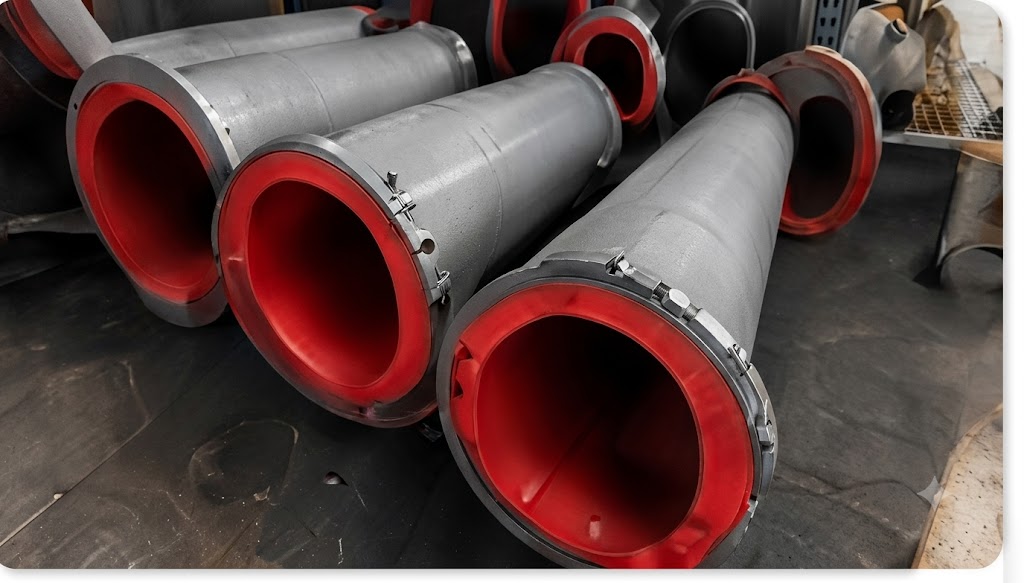
Mineral slurry can wear an unprotected steel pipe through continuous contact with sand, ore particles, tailings or other solids. The wear may be concentrated at bends, reducers, inlets, outlets and areas where the flow changes direction. A pipe that appears to have the correct nominal size can therefore still need different lining details in different sections.
A resilient rubber lining creates a wear surface between the slurry and the steel substrate. Depending on the compound and service conditions, it can also absorb part of the impact and reduce noise or vibration compared with direct metal contact. The lining should be treated as an application-specific system: rubber grade, thickness, bonding, panel layout and inspection all matter.
Before requesting a quotation, map the areas where the slurry is most likely to cause wear. The following zones often need special attention:
Photos of worn areas, previous replacement records and a simple flow-direction sketch can help the supplier understand the wear pattern. These details are especially useful when the pipe has already been in service.
A supplier needs operating information as well as dimensions. The following data gives a useful starting point for material and design review:
| Information | Why It Matters |
|---|---|
| Pipe ID, OD, length and wall thickness | Defines the available space, lining geometry and connection details. |
| Slurry composition and solids content | Helps identify the likely abrasion mechanism and material compatibility needs. |
| Particle size, shape and hardness | Indicates whether sliding, cutting, gouging or impact is the main wear mode. |
| Flow velocity, pressure and temperature | Supports lining thickness, compound and attachment review. |
| Bend radius, reducers, branches and flange drawings | Allows the lining to be designed around actual pipe geometry. |
| Quantity, delivery destination and inspection requirements | Defines the commercial scope and quotation basis. |
Natural rubber is often considered for wet abrasive slurry service because resilience and abrasion performance can be important in this type of application. The final compound must still be reviewed against the actual medium and operating conditions. A general wear-resistant label does not replace an application review.
Tell the supplier if the slurry contains oil, fuel, solvents, aggressive chemicals or unusual additives. Temperature, outdoor exposure, cleaning chemicals and intermittent immersion can also influence compound selection. Where the pipe carries a combination of abrasion and chemical exposure, another rubber family or a purpose-designed compound may be more appropriate.
For sheet-based lining requirements, compare the proposed material data with the operating duty instead of choosing only by color, surface appearance or price. The wear-resistant natural rubber sheet page provides a related reference for mining sheet selection and fabrication.
There is no single thickness that fits every slurry pipe. Thickness should reflect wear severity, available clearance, pipe geometry, expected maintenance interval and installation constraints. Increasing thickness can provide more wear allowance in some cases, but it also changes internal diameter, weight, flexibility and the treatment of joints.
Hardness should be considered together with resilience, abrasion resistance, tear behaviour and the type of slurry contact. A high-impact inlet may need a different design focus from a straight section with fine particles moving continuously across the surface. Avoid specifying hardness without describing the wear mechanism.
For a detailed selection framework, review the mining rubber lining thickness and hardness guide. Provide the particle size, flow speed, concentration, pressure, temperature and existing wear history whenever possible.
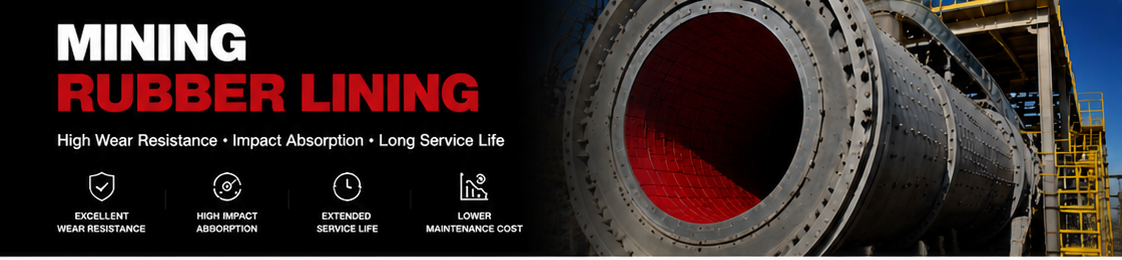
Bonded lining can provide a continuous internal wear surface when the steel substrate is properly prepared. Surface condition, cleanliness, adhesive compatibility, application timing and curing conditions are important. Moisture, oil, rust, sharp edges or poor access can affect the result even when the rubber material itself is suitable.
Mechanical retention may be considered where panels need to be replaced or where the equipment design makes bonding difficult. Fasteners, washers, holes and exposed edges must be positioned so that they do not become premature wear points. The pipe drawing should show the proposed fastening arrangement and any clearance limits.
Simple straight pipe sections may use cut sheet panels, while elbows, reducers and branches may need templates or preformed sections. The correct panel layout should follow the flow direction and avoid exposed upstream edges where possible. Accurate drawings reduce fitting problems and material waste.
Installation quality is part of lining performance. Before work begins, inspect the pipe for corrosion, deformation, sharp edges, weld irregularities and contamination. Confirm the surface-preparation method, adhesive or fastening system, panel sequence and curing requirements.
For larger fabricated equipment such as chutes and hoppers, see the separate rubber chute liners for mining selection guide. The same principles of flow direction, impact zones, joints and maintenance access apply, but the geometry and loading pattern are different.
Plan inspections around the actual duty and maintenance access. Record the location and approximate depth of wear, not only whether the lining looks acceptable. A consistent record helps distinguish uniform abrasion from local impact, edge lifting, joint failure or a change in process conditions.
Include the following information in your enquiry so the supplier can respond with a defined scope:
No. Suitability depends on the slurry, temperature, pressure, particle characteristics, chemistry, pipe geometry and installation method. The supplier should review the complete service condition.
Not always. Elbows and transitions can experience different flow direction, impact and turbulence. They may need different panel layouts, thicknesses or inspection priorities.
Send a dimensioned pipe or spool drawing showing internal diameter, length, bend radius, reducers, branches, flanges, bolt holes and any restricted areas. Photos and flow-direction notes are also useful.
Provide photos, dimensions, the previous lining specification, service time and the location of wear. This information helps the supplier understand whether the issue relates to material selection, geometry, installation or changing process conditions.
Qihang Rubber supplies mining rubber lining and wear-resistant rubber sheet for abrasive equipment applications. Send your pipe drawings, slurry information, dimensions, quantity, photographs and destination through the Qihang Rubber inquiry form.
For additional selection information, review the wear-resistant rubber sheet guide and the overview of mining rubber lining for wear-resistant equipment. A clear RFQ gives the supplier a better basis for discussing material, thickness, fabrication and installation requirements.
For upstream equipment and liner specification, see the Rubber Lining for Mineral Processing Equipment Selection Guide before sending pipe, elbow and slurry data.
Tianjin Qihang Plastic Technology Co., Ltd
12+ Years Expertise in Industrial Rubber Sheet Manufacturing • Global Export Leader • REACH/RoHS Certified
...[ Read More >>]


