Natural rubber lining is widely used where abrasive slurry, ore particles, impact and wet process conditions can shorten the service life of unprotected steel equipment. For mining and mineral-processing buyers, the goal is not simply to choose a rubber sheet by thickness. The lining must match the equipment type, particle size, impact angle, slurry chemistry, installation method and inspection plan.
This guide explains how natural rubber lining is specified for mining slurry pipes, chutes, hoppers, tanks and other wear areas. It also connects the main selection points with Qihang Rubber's Mining Rubber Lining and Wear-Resistant Natural Rubber Sheet resources so procurement teams can prepare clearer RFQs.
For a pipe-specific checklist covering slurry composition, bends, lining thickness and RFQ information, read the Slurry Pipe Rubber Lining: Mining Specification Guide.
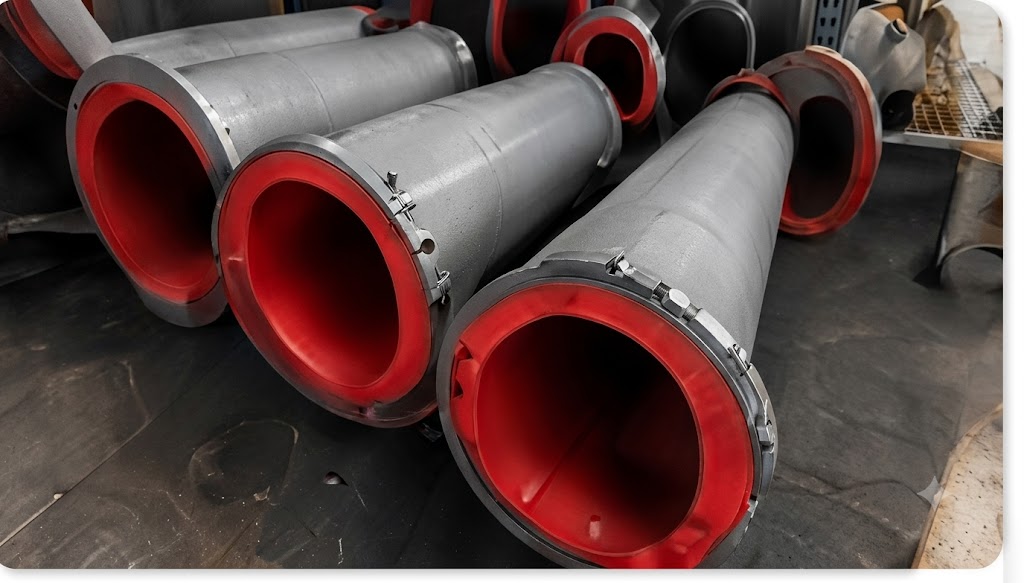
For mining pump applications, see the Slurry Pump Rubber Lining Selection Guide for wear zones, component details and RFQ preparation.
Natural rubber is valued in wear applications because it combines elasticity, tear resistance and impact absorption. In many wet abrasive environments, a resilient rubber surface can help reduce direct particle impact on metal surfaces. The final result depends on ore type, velocity, particle size, lining thickness, hardness, bonding quality and maintenance practice, so performance should always be confirmed against the real operating condition.
Rubber lining is selected differently for each equipment type. A pipe carrying fine slurry does not experience the same load as a chute receiving large ore lumps. The buyer should describe the equipment and operating conditions before choosing a lining grade.
Mining slurry pipes often need lining where abrasive particles move continuously through bends, reducers and high-wear zones. Important RFQ details include internal diameter, pipe length, bend angle, slurry concentration, particle size, flow velocity and whether the lining will be bonded to new pipework or used for repair.
Chutes and hoppers normally face more impact than straight pipe sections. Drop height, lump size and material trajectory are important. Where impact is high, buyers often review rubber thickness, hardness and backing structure together. For a more focused chute guide, see Rubber Chute Liners for Mining.
Rubber lining for tanks and vessels must consider immersion time, temperature, liquid chemistry, cleaning method and inspection access. Natural rubber may be suitable for selected wet abrasive services, while oil, solvent or high-temperature exposure may require another compound.
Thickness and hardness should be selected from the application, not guessed from a catalog line. Thicker lining may improve wear allowance in some applications, while softer or harder compounds may behave differently under impact and sliding abrasion. The right choice depends on the wear mechanism.
| Condition | Selection Focus | RFQ Information to Provide |
|---|---|---|
| Fine slurry in pipework | Abrasion resistance, bonding quality, bend protection | Pipe ID, flow velocity, solids content, particle size |
| Ore impact in chutes | Impact absorption, thickness, fastening or bonding method | Lump size, drop height, chute drawing, operating hours |
| Tank or vessel lining | Chemical environment, immersion, inspection access | Medium, temperature, tank dimensions, cleaning method |
For a deeper explanation of thickness and Shore A hardness, use the related guide: How to Choose Mining Rubber Lining Thickness and Hardness.
Natural rubber lining is not the best answer for every service. Before confirming a lining, buyers should check the process medium, temperature and any cleaning chemicals. Oil, hydrocarbon solvents and some high-temperature conditions may require a different compound. If the operating condition is uncertain, send the medium name, concentration and temperature range with the RFQ.
The success of a rubber lining project depends not only on the rubber sheet. Surface preparation, adhesive system, curing method, seams, edges and inspection all affect the finished lining. For fabricated parts, drawings and photos help the supplier identify difficult corners, flanges, bolt holes and transitions before production.
To receive a useful quotation, prepare the following information before contacting the supplier:
For a complete mining wear-protection discussion, review these related Qihang Rubber resources:
No. It can be suitable for many wet abrasive services, but the final choice depends on slurry composition, velocity, particle size, temperature and chemical exposure. Oil, solvent or high-temperature service should be reviewed separately.
No. Thickness should be selected according to wear allowance, impact, equipment geometry and installation method. A straight slurry pipe and a high-impact chute may need different lining designs.
Equipment drawings, dimensions, operating conditions, material handled, quantity and target thickness are the most useful starting points. Photos of the wear area can also help the supplier understand the application.
If you are preparing a rubber lining project for mining, slurry transport or wear protection, send your drawings and operating conditions through the Qihang Rubber inquiry form. The team can review the application and discuss a suitable natural rubber lining or wear-resistant rubber sheet option.
Tianjin Qihang Plastic Technology Co., Ltd
12+ Years Expertise in Industrial Rubber Sheet Manufacturing • Global Export Leader • REACH/RoHS Certified
...[ Read More >>]


