Slurry pump rubber lining protects pump casings, impellers and other wetted components from abrasive mineral slurry. In mining and mineral processing, the right lining is selected from the complete service condition, not from pump size alone. Solids content, particle size, flow velocity, pressure, temperature, chemistry, component geometry, lining thickness and replacement method all influence the specification.
This guide is for mine operators, maintenance engineers, pump users, equipment manufacturers and procurement teams preparing a rubber lined slurry pump requirement. It explains the main wear zones, material questions, installation considerations and RFQ information needed for a practical quotation. For connected pipework, see the slurry pipe rubber lining specification guide.
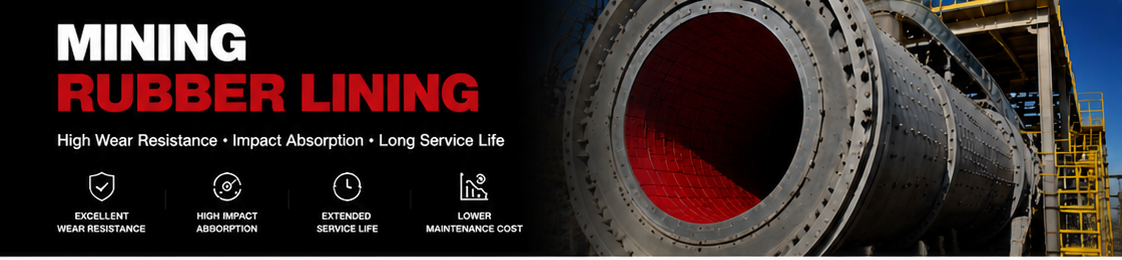
Slurry pumps move a mixture of liquid and solid particles. Sand, ore, tailings and mineral fragments can create continuous sliding abrasion, while larger particles may cause impact or cutting at changes in flow direction. The pump casing, impeller passages, suction area, discharge area and side liners may therefore experience different wear patterns during the same operating cycle.
A resilient rubber lining provides a sacrificial wear surface between the slurry and the pump structure. In suitable wet abrasive service, the lining can also absorb part of the impact and help reduce direct contact between hard particles and metal. The result depends on the rubber compound, component design, clearances, operating point, installation quality and maintenance practice.
Map the wear pattern before selecting replacement lining or requesting a new pump lining. The following areas often need separate review:
When replacing an existing lining, send photographs of the worn components and identify the most damaged zones. A simple sketch showing slurry direction, pump orientation and the location of the failure is often more useful than a general statement that the pump is wearing quickly.
The pump duty should be described in measurable terms wherever possible. The same pump model may operate in different conditions and require a different lining review. Important information includes:
| Operating information | Selection relevance |
|---|---|
| Solids content and slurry density | Indicates the amount of solid material contacting the lining and the duty of the pump. |
| Particle size, shape and hardness | Helps distinguish sliding abrasion, cutting, gouging and impact mechanisms. |
| Flow rate, pressure and speed | Supports review of internal velocity, turbulence, clearance and component loading. |
| Temperature and chemical exposure | Helps determine whether natural rubber is appropriate or another compound needs review. |
| Operating hours and maintenance history | Provides context for wear distribution and replacement planning. |
Natural rubber is often considered for wet abrasive slurry duties because resilience and abrasion performance can be important in this type of application. The final compound must still be reviewed against the actual medium, temperature and mechanical load. A general wear-resistant label is not a substitute for checking the complete service condition.
Tell the supplier if the slurry contains oil, fuel, solvents, aggressive chemicals or unusual additives. Cleaning agents, intermittent immersion, outdoor storage and elevated temperature may also affect material selection. Where abrasion is combined with chemical exposure or heat, another rubber family or a purpose-designed compound may be more suitable.
For related sheet material information, review the wear-resistant natural rubber sheet product page. The material choice should be compared with the actual pump duty, component geometry and attachment method instead of being selected only by appearance or price.
Lining thickness affects wear allowance, component clearance, weight, flexibility and installation effort. The thickest available sheet is not automatically the correct choice. Internal clearances and the pump design must remain within the required operating range after lining or replacement components are installed.
Hardness should be reviewed together with resilience, abrasion resistance, tear behaviour and the dominant wear mechanism. A pump that handles fine slurry continuously may have a different requirement from a pump receiving larger particles or intermittent impact. Do not specify hardness without describing the slurry, flow conditions and observed wear pattern.
For a broader framework, use the mining rubber lining thickness and hardness guide. Include current lining thickness, component dimensions and any clearance measurements in the RFQ when they are available.
Impeller geometry affects the way slurry enters, rotates and leaves the pump. Replacement rubber components must match the pump model, shaft arrangement, passage geometry and required clearances. Provide the part number, drawing, sample component or accurate measurements so the supplier can review fit and scope.
Casing liners, side liners and cover-related components may be supplied as replaceable pieces or as part of a lining system. The specification should identify the component boundaries, bolt holes, sealing surfaces and any areas that must remain exposed. A liner edge that is not supported or correctly seated can become a local wear point.
Some pump applications require cut, moulded or fabricated rubber components. Drawings and worn-part photographs help determine whether a standard part, a cut panel or a custom component is the practical option. The supplier should confirm dimensions and tolerances against the actual equipment rather than relying on a generic pump description.
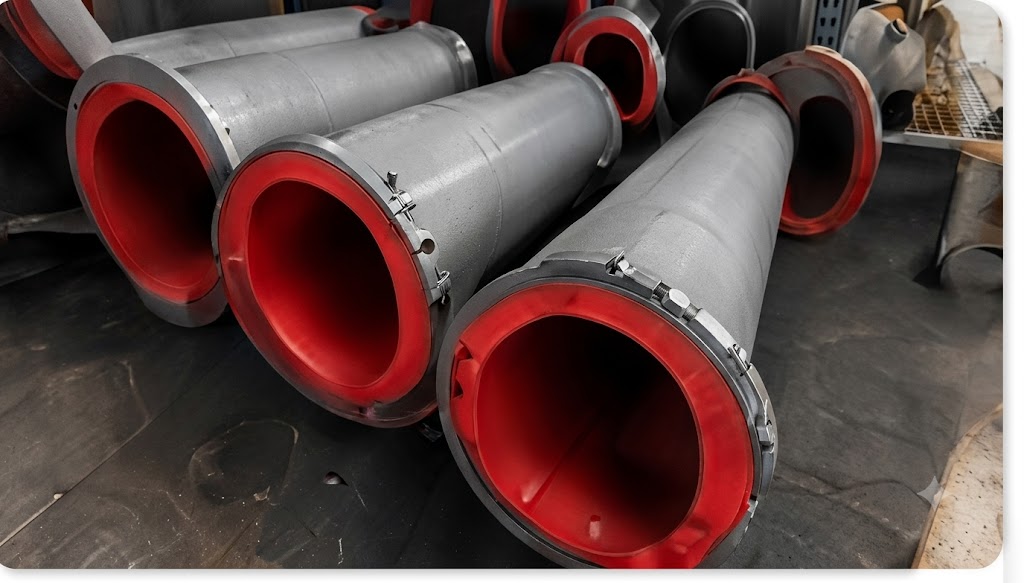
Bonded lining can create a continuous protective surface when the substrate and installation conditions are suitable. Surface preparation, cleanliness, adhesive compatibility, curing conditions and access are important. Moisture, oil, rust, sharp edges or poor preparation can affect adhesion even when the rubber material is correctly selected.
Replaceable liners can support planned maintenance where the pump design allows individual components to be removed. The replacement plan should consider joint location, seating, fasteners, clearances and safe access. A modular arrangement may be useful when wear is concentrated in predictable zones, but the components still need to be specified as a complete system.
Before installation, inspect the pump body and mating parts for corrosion, deformation, damaged threads, sharp edges and contamination. Confirm that the proposed liner or component fits the equipment and that seals, bolts, shafts and clearances remain functional.
During maintenance, record where the rubber has worn and whether the pattern is uniform. Local wear near an inlet, edge or joint may indicate a flow or installation issue rather than a simple need for more thickness.
Include the following details so the supplier can prepare a defined technical and commercial response:
No. Suitability depends on slurry composition, particle characteristics, temperature, chemistry, pressure, speed and component design. The complete service condition should be reviewed before selecting a compound.
Not necessarily. Impellers, casings, side liners and inlet areas may experience different wear mechanisms. The proposed hardness should be reviewed with the component duty and operating condition.
Send the pump model and part number together with drawings, dimensions, photographs, current material information and wear history. Identify the component and the location of the main wear.
Yes. Photos, measurements, service time, slurry information and the previous specification can help the supplier review whether the issue relates to material, geometry, installation or changing process conditions.
Qihang Rubber supplies mining rubber lining and wear-resistant rubber sheet for abrasive equipment applications. Send pump drawings, component details, slurry data, photographs, quantity and destination through the Qihang Rubber inquiry form.
You can also review the slurry pipe rubber lining guide for connected pipework and the wear-resistant rubber sheet mining guide when preparing a broader mineral-processing requirement.
For complete equipment selection, review the Rubber Lining for Mineral Processing Equipment Selection Guide before finalizing slurry pump liner dimensions and material.
Tianjin Qihang Plastic Technology Co., Ltd
12+ Years Expertise in Industrial Rubber Sheet Manufacturing • Global Export Leader • REACH/RoHS Certified
...[ Read More >>]


