When it comes to Cloth-inserted Rubber Sheets (also known as fabric-reinforced rubber sheets), the specific rubber material used depends heavily on the environment and performance requirements of your application (e.g., oil resistance, wear resistance, or temperature).
Here are the most common rubber materials used and their primary characteristics:
Key Traits: Excellent elasticity, high mechanical strength, and superior tear/wear resistance.
Best Used For: Standard hardware workshops, buffering pads, and general stamping workbench tops. It offers great shock absorption but has poor resistance to oil and high temperatures.
Key Traits: Exceptional oil and fuel resistance (against mineral oils, lubricants, and greases).
Best Used For: Environments involving cutting oils, rust-preventative oils, or lubricants during metal stamping and hardware processing. Using NBR prevents the rubber from swelling, softening, or degrading.
Key Traits: Outstanding resistance to aging, weathering, ozone, acids, alkalis, and high temperatures (typically up to 120°C - 150°C).
Best Used For: Outdoor applications, chemical-exposed environments, or workbenches requiring moderate heat resistance.
Key Traits: A great "all-rounder" with well-balanced properties. It offers good weather aging resistance, decent oil resistance, and self-extinguishing flame retardancy.
Best Used For: Heavy-duty industrial gaskets and premium workshop table mats
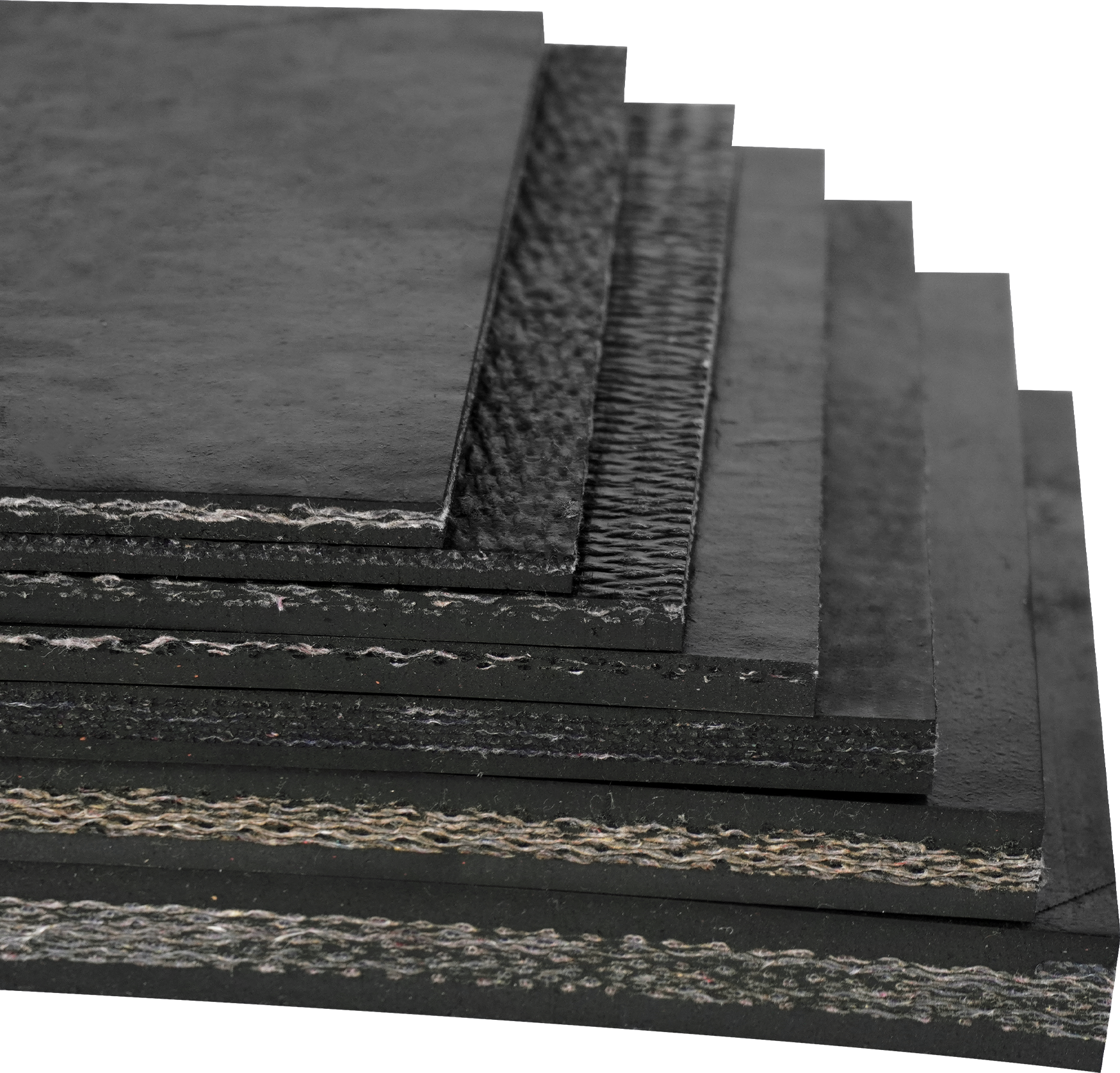
This image shows a fabric reinforced rubber sheet with multiple layers of fabric inserts.
The number of fabric reinforcement layers (also called plies) included in a cloth-inserted rubber sheet is not fixed. It typically ranges from 1 to 4 layers, depending entirely on the required thickness and the mechanical pressure the sheet needs to withstand.
Here is a breakdown of how the layers are structured and selected:
1-Ply (Single Layer): Most common for thin sheets (usually 1.5mm to 3mm thick). Excellent for light cushioning and standard gaskets.
2-Ply: Used for medium-duty applications (typically 3mm to 6mm thick) where extra tear resistance is needed.
3-Ply to 4-Ply: Designed for heavy-duty industrial applications (usually 6mm and thicker) that face high mechanical stress or high pressure.
The insert itself isn't just basic cloth; it is typically woven from high-strength synthetic fibers to prevent the rubber from stretching under pressure:
Polyester / Nylon: The industry standard. Offers high tensile strength and great flexibility.
Cotton (Duck Fabric): Excellent for lower-pressure applications and provides good adhesion to the rubber layers.
Fiberglass / Kevlar: Used in specialty high-temperature or extreme-strength environments.
Custom Thickness & Dimensions
We offer cloth-inserted rubber sheets in a wide range of thicknesses, from 1mm to 50mm, and can fully customize the dimensions to meet your specific requirements. We also provide bespoke manufacturing based on your technical drawings (OEM/Custom-to-Drawing).
Currently, we maintain a ready-to-ship stock of 5mm and 8mm 1-ply (single fabric layer) rubber sheet rolls for immediate delivery.
When sourcing industrial rubber sheeting, long-term reliability and flawless surface quality are critical to minimizing downtime and ensuring operational safety. Our premium Cloth-Inserted Rubber Sheets are engineered specifically to meet the rigorous demands of heavy-duty industrial applications, offering the perfect balance of durability and precision.
Industrial environments demand materials that withstand continuous stress. Our fabric-reinforced rubber sheets are designed for maximum longevity, addressing your core performance concerns:
Exceptional Fatigue & Crack Resistance: Will it crack after repeated bending? No. The high-tensile fabric reinforcement absorbs dynamic stress, preventing cracking, delamination, and deformation even under repetitive mechanical cycling.
Superior Tear & Wear Resistance: The internal ply structure acts as a rip-stop barrier. It delivers outstanding abrasion resistance, making it ideal for high-friction workbenches, gaskets, and heavy-impact stamping pads.
Advanced Aging & Weathering Resistance: Formulated with premium rubber compounds, our sheets resist ozone, UV exposure, and thermal aging, ensuring a prolonged service life without hardening or degradation, whether used indoors or outdoors.
We understand that structural integrity starts at the surface. A defective sheet leads to improper sealing and premature failure. That is why we enforce strict quality control:
Defect-Free Smooth Finish: Is the surface smooth? Absolutely. Every roll undergoes precise vulcanization to guarantee a uniform, smooth finish free of surface cracks, impurities, or blisters.
Zero Air Bubbles: Our advanced manufacturing process eliminates internal and external air pockets, ensuring a solid, homogenous structure that handles high pressures effortlessly.
Rigorous Thickness Tolerance: We maintain industry-leading precision in thickness uniformity. You get exactly what you specify, ensuring perfect sealing performance and flawless fitment every single time.
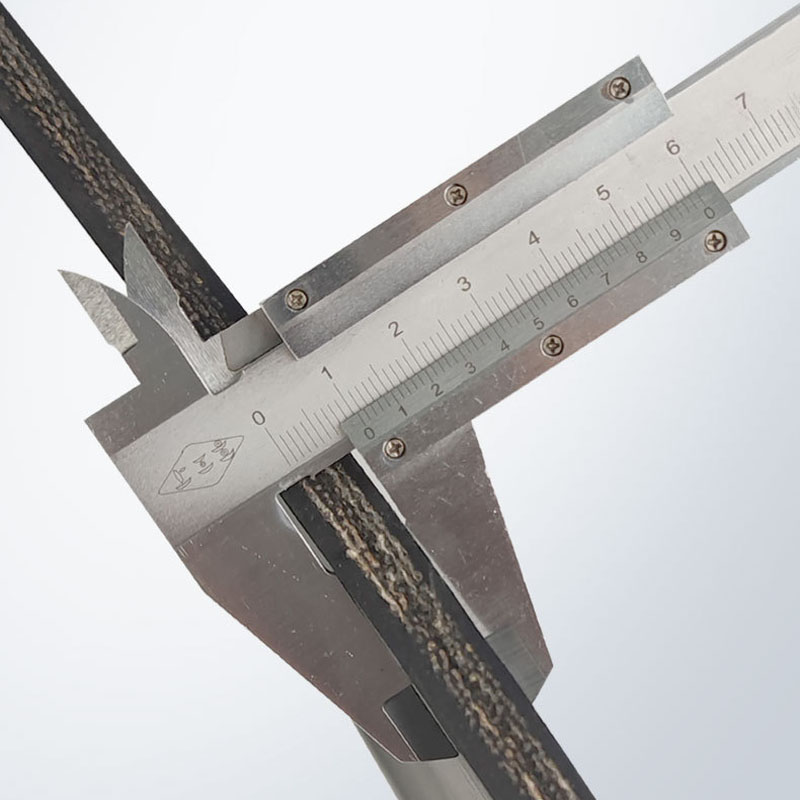
The premium quality of our cloth-inserted rubber sheets stems from our state-of-the-art manufacturing line. Producing a truly reliable fabric-reinforced sheet requires precise control over temperature, pressure, and alignment.
Rotocure (Rotary Curing) Technology: Unlike traditional plate presses that leave seam marks, we utilize continuous rotocure machines. This ensures uninterrupted vulcanization, giving the rolls consistent mechanical properties and an identical finish from the first meter to the last.
High-Precision Multi-Ply Calendering:Before curing, the rubber compound and the high-tensile fabric are fed through heavy multi-roll calenders. This critical step forces the rubber deep into the weave of the fabric, achieving perfect molecular bonding. It is this intense pressure that guarantees zero air pockets and prevents ply delamination even under severe shear stress.
To maximize the service life of your insertion rubber sheets, proper handling and installation are key. Our engineering team recommends the following guidelines for industrial application:
Correct Cutting Tools: When cutting custom gaskets or workbench mats, always use high-speed mechanical cutters or water-jet cutting. Avoid dull manual blades, which can fray the internal synthetic fibers and create entry points for oil or moisture, leading to premature edge delamination.
Proper Bolt Torque for Gaskets: For sealing applications, ensure flange bolts are torqued evenly in a star pattern. Over-tightening can crush the rubber matrix and damage the internal fabric reinforcement, while under-tightening will compromise the seal.
Storage Recommendations: Keep unused rubber rolls in a cool, dry, and dark warehouse. Avoid direct sunlight (UV rays) and contact with electrical equipment that generates ozone, as these environmental factors accelerate the aging of unstabilized rubber.
Contact Us for a Quote or Free Samples
Ready to elevate your operations? Contact our team today to request a competitive quote or order a free sample to test our quality firsthand.
Related Articles:<How to Choose the Right Insertion Rubber Sheet for Industrial Use>
<What Is Insertion Rubber Sheet? Uses, Benefits and Industrial Applications>
Tianjin Qihang Plastic Technology Co., Ltd
12+ Years Expertise in Industrial Rubber Sheet Manufacturing • Global Export Leader • REACH/RoHS Certified
...[ Read More >>]


