When sourcing electrical safety mats, many buyers come across two similar terms: rubber insulation mat and rubber dielectric mat.
At first glance, these names may appear to describe different products, leading to confusion during product selection or procurement.
Are rubber insulation mats and rubber dielectric mats the same?
If not, what is the difference, and which term should be used?
In this article, we explain the meaning of both terms, how they are used in real-world electrical applications, and how buyers should understand them when selecting electrical safety products.
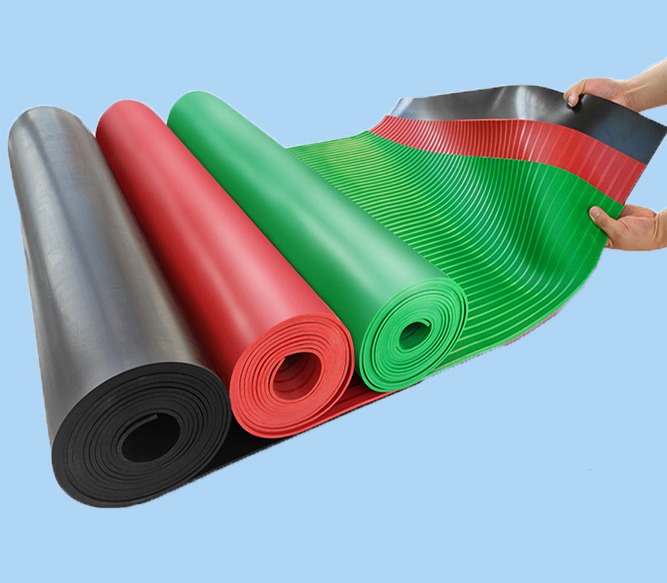
Rubber insulation mat is the most widely used commercial and industry term for rubber-based electrical safety mats.
It focuses on the functional purpose of the product—providing insulation between electrical equipment and personnel. This term is commonly used by:
Electrical contractors
Safety managers
Procurement teams
Power utilities
Industrial facilities
In most product catalogs, tenders, and procurement documents, “rubber insulation mat” is the preferred wording because it is clear, practical, and easy to understand.
The term rubber dielectric mat originates from the technical word dielectric, which refers to a material’s ability to resist the flow of electrical current.
In electrical engineering, dielectric performance is measured by properties such as:
Dielectric strength
Electrical resistance
Breakdown voltage
Because of this, “rubber dielectric mat” is more commonly used in technical contexts, such as:
Engineering specifications
Laboratory test reports
Compliance documentation
Technical data sheets
The term emphasizes the electrical insulating properties of the rubber material rather than its application.
In most cases, no.
Rubber insulation mats and rubber dielectric mats usually refer to the same type of product, manufactured from insulating rubber compounds and designed to protect users from electrical shock.
The difference lies primarily in terminology, not in product structure or function:
“Rubber insulation mat” → practical, commercial, and widely searched
“Rubber dielectric mat” → technical, descriptive, and specification-focused
Both terms describe rubber mats used for electrical insulation and safety protection.
The use of different terms reflects the roles of different users in the electrical industry.
Procurement teams often prefer “rubber insulation mat” because it is clear and standardized
Engineers and inspectors may use “rubber dielectric mat” when discussing test results or performance data
Manufacturers often use both terms to communicate effectively with different audiences
Understanding both terms helps buyers avoid confusion and communicate more accurately with suppliers.
For most buyers and projects, rubber insulation mat is the recommended primary term. It is widely recognized, easy to search, and commonly used in international trade.
However, understanding the term rubber dielectric mat is still important, especially when:
Reviewing technical documents
Evaluating test reports
Comparing dielectric strength values
In practice, many professional product descriptions use both terms together to ensure clarity.
You can review detailed specifications and dielectric performance on our Rubber Insulation Mat product page.
From a search engine perspective, “rubber insulation mat” has broader search coverage and higher commercial relevance, while “rubber dielectric mat” attracts more technical and engineering-focused searches.
Using both terms naturally within content helps:
Improve search visibility
Match different user search intents
Increase topical authority for electrical safety products
This balanced approach benefits both ranking performance and user understanding.
In real-world electrical environments such as substations and control rooms, the product installed on the floor is typically referred to as a rubber insulation mat.
However, when that same product is tested in a laboratory or documented in compliance reports, it may be described as a rubber dielectric mat due to its electrical performance characteristics.
Despite the different terminology, the product itself remains the same.
Rubber insulation mats and rubber dielectric mats are not competing products—they are two ways of describing the same electrical safety solution.
Understanding how and why these terms are used helps buyers make informed decisions, interpret technical documents correctly, and communicate effectively with suppliers.
For most commercial and industrial applications, using “rubber insulation mat” as the primary term is recommended, while recognizing “rubber dielectric mat” as a technical description of its insulating performance.
For full specifications, voltage ratings, and customization options, visit our Rubber Insulation Mat product page.
For a detailed explanation of dielectric performance and voltage ratings, you may also read our guide on rubber insulation mat voltage ratings.
⟨Rubber Insulation Mat Voltage Ratings Explained: 5kV to 35kV⟩
Tianjin Qihang Plastic Technology Co., Ltd
12+ Years Expertise in Industrial Rubber Sheet Manufacturing • Global Export Leader • REACH/RoHS Certified
...[ Read More >>]


