A rubber sheet is a versatile material made from natural or synthetic rubber, widely used across industries for its excellent elasticity, sealing properties, vibration absorption, and durability. From industrial sealing and machinery protection to construction flooring and daily life applications, rubber sheets play an indispensable role.
With advances in manufacturing technology, rubber sheets are no longer single-purpose products. Today, they come in different formulations, thicknesses, and surface finishes, tailored to meet the diverse demands of various industries.
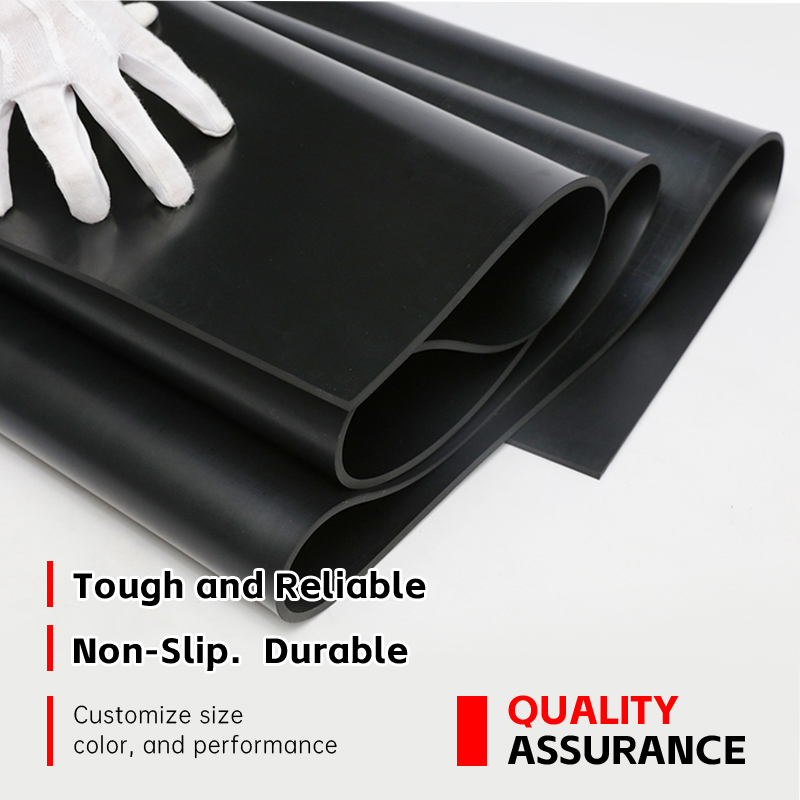
The performance of a rubber sheet largely depends on the materials chosen. Common types include:
Natural Rubber – highly elastic and flexible, suitable for cushioning and shock absorption.
Nitrile Rubber (NBR) – excellent oil resistance, widely used in automotive, petroleum, and chemical industries.
EPDM Rubber – outstanding resistance to weathering, ozone, and UV, ideal for outdoor applications.
Neoprene Rubber (CR) – balances oil resistance, aging resistance, and flame resistance.
Silicone Rubber – exceptional temperature resistance, suitable for medical, food, and electronic applications.
Selecting the right raw material is the foundation for ensuring quality and long-lasting performance.
Raw rubber is blended with fillers, vulcanizing agents, plasticizers, and stabilizers using internal mixers or open mills. This stage is crucial for:
Enhancing durability and stability;
Improving resistance to wear, weather, and chemicals;
Adding special functions such as flame retardancy or anti-static properties.
The uniformity of mixing directly affects the quality of the final rubber sheet.
The mixed rubber compound is shaped into sheets through different processes:
Molding – suitable for thicker sheets and small batch production.
Calendering – ideal for producing wide, uniform sheets with consistent thickness.
Extrusion – efficient for continuous production of long rolls.
Each method results in specific thickness ranges and surface finishes.
Vulcanization is the most critical stage in manufacturing. Under high temperature and pressure, cross-links form between rubber molecules, dramatically improving:
Elasticity and toughness;
Heat and aging resistance;
Load-bearing and wear resistance.
Unvulcanized rubber is sticky and weak, but after vulcanization, rubber sheets gain the stability required for industrial use.
After vulcanization, the sheets are cooled to lock in their properties. Final processing includes:
Cutting and trimming to precise dimensions;
Surface treatment for smoothness or improved grip;
Quality checks to ensure thickness uniformity and durability.

Thickness determines load capacity and durability:
Thin sheets (1–3 mm): suitable for sealing and insulation;
Medium thickness (4–10 mm): commonly used for anti-slip flooring or vibration damping;
Thick sheets (≥10 mm): ideal for heavy-duty industrial flooring and protective lining.
Each rubber type has different working temperature ranges:
Natural Rubber: -50°C to +70°C;
EPDM: -40°C to +120°C;
Silicone Rubber: -60°C to +250°C.
Selecting the right material ensures reliability in both hot and cold environments.
In industries such as mining, transportation, or heavy machinery, high wear resistance is essential for extending service life and reducing maintenance costs.
In chemical plants or laboratories, rubber sheets often come into contact with acids, alkalis, oils, or solvents. For these environments:
Nitrile Rubber (NBR) is best for oil resistance;
Fluoroelastomers are suitable for highly corrosive conditions.
For outdoor use, rubber sheets must withstand long-term exposure to sunlight, ozone, and rain. EPDM rubber performs exceptionally well in weather resistance, making it a popular choice for outdoor and electrical applications.
When selecting rubber sheets, businesses should evaluate thickness, temperature resistance, wear resistance, chemical resistance, and weatherability according to their specific environment. Choosing the right type not only improves safety and efficiency but also reduces long-term maintenance and replacement costs.
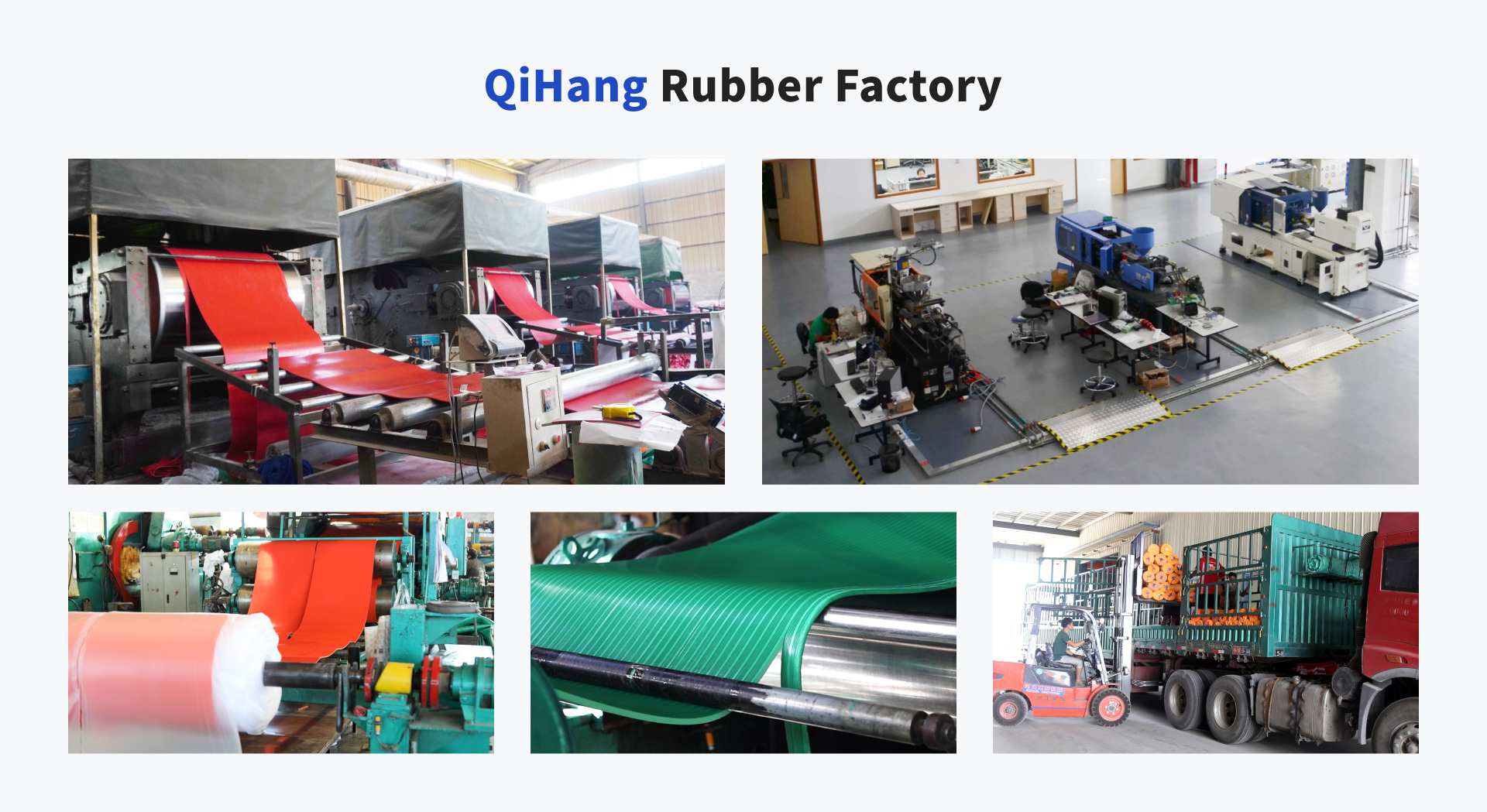
Qihang Rubber provides tailored solutions for different industries. From material selection and thickness to sheet dimensions, every product can be customized to fit unique requirements.
Whether for industrial production, construction, automotive, medical, or energy applications, Qihang Rubber offers high-performance rubber sheets designed to meet international standards. With advanced manufacturing and strict quality control, we are committed to delivering durable, innovative, and reliable rubber sheet solutions.
Q1: What are rubber sheets used for?
Rubber sheets are widely used for sealing, insulation, anti-slip flooring, vibration damping, and industrial protection across multiple industries.
Q2: Which type of rubber sheet is best for outdoor use?
EPDM rubber sheets are the best choice for outdoor applications due to their strong resistance to UV, ozone, and weather conditions.
Q3: How do I choose the right thickness of rubber sheet?
Thin sheets (1–3 mm) work best for sealing, while thicker sheets (10 mm or more) are recommended for heavy-duty flooring and protective lining.
Q4: Are rubber sheets resistant to chemicals?
Yes, but chemical resistance depends on the material. NBR is excellent for oils, while fluoroelastomers handle aggressive chemicals better.
Q5: Can rubber sheets be customized?
Yes, suppliers like Qihang Rubber offer custom solutions in terms of material, thickness, width, and performance to meet specific industrial needs.
Tianjin Qihang Plastic Technology Co., Ltd
12+ Years Expertise in Industrial Rubber Sheet Manufacturing • Global Export Leader • REACH/RoHS Certified
...[ Read More >>]


