Selecting the right insulation rubber sheet for high-voltage electrical equipment is one of the most important decisions in maintaining workplace safety and electrical reliability.
These sheets are used as non-conductive protective barriers, preventing electric shock, current leakage, and accidental grounding in areas exposed to live voltages.
With the market offering a variety of materials, thicknesses, and voltage grades, it can be challenging to identify which insulation rubber mat provides the most effective protection.
This guide will explain how to evaluate voltage ratings, material performance, environmental conditions, and international standards—so you can confidently choose the right insulation rubber sheet for your industrial applications.
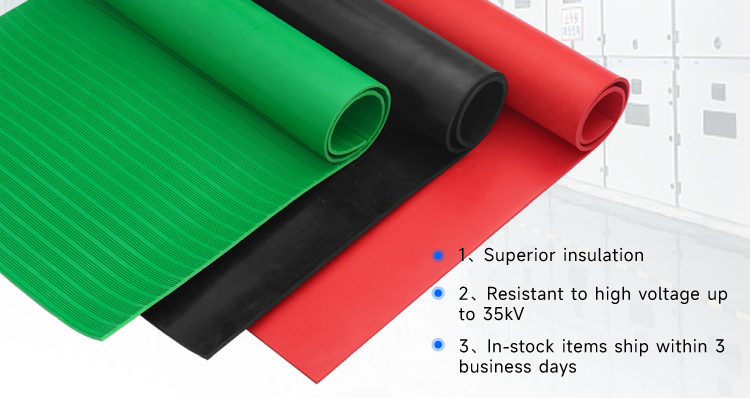
An insulation rubber sheet, also known as a dielectric rubber mat or electrical safety mat, is a flexible sheet made from high-grade elastomer compounds such as EPDM, SBR, NBR, or natural rubber.
Its main purpose is to isolate electrical current and protect workers from electric shocks when operating near live electrical panels or switchgear systems.
These sheets are used in:
Power distribution stations and substations
High-voltage switchboards and transformer areas
Control panels and generator rooms
Industrial laboratories and electrical test benches
By preventing the passage of electric current, insulation rubber ensures a safer, non-conductive working surface and reduces the risk of short circuits or electrical faults.
Before choosing any insulation sheet, it’s essential to match its voltage protection class to your operating conditions.
Each class is designed for specific voltage levels, according to international standards such as IEC 61111 and ASTM D178.
| Class | Working Voltage (AC) | Withstand Voltage | Application Example |
|---|---|---|---|
| Class 0 | Up to 1,000V | 5,000V | Low-voltage control rooms |
| Class 1 | Up to 7,500V | 10,000V | Electrical panels & workshops |
| Class 2 | Up to 17,000V | 20,000V | Power distribution areas |
| Class 3 | Up to 26,500V | 30,000V | Substations & transformers |
| Class 4 | Up to 36,000V | 40,000V | High-voltage switchyards |
✅ Pro Tip: Always choose an insulation mat rated above your operating voltage to ensure an extra safety margin and long-term reliability.
Choosing the right rubber material directly impacts the safety, durability, and dielectric performance of your insulation system.
Each material has its own unique combination of electrical resistance, temperature tolerance, and chemical stability.
Outstanding dielectric strength and thermal resistance
Excellent UV, ozone, and weather aging resistance
Best choice for outdoor substations, transformer flooring, and renewable energy installations
Superior oil, grease, and chemical resistance
Suitable for industrial facilities, generator rooms, and machine bases exposed to lubricants
Provides both electrical and chemical protection
Economical and versatile
Good mechanical strength and moderate insulation properties
Recommended for medium-voltage indoor flooring
Excellent elasticity and shock absorption
Used for light-duty insulation or as anti-fatigue electrical mats
➡️ For high-voltage outdoor equipment, EPDM is typically the most reliable due to its balance of electrical insulation and environmental stability.
A high-quality insulation rubber sheet should combine electrical performance with mechanical durability.
Below are key technical indicators to compare:
| Property | Recommended Range | Purpose |
|---|---|---|
| Dielectric Strength | 30–50 kV/mm | Determines insulation capacity |
| Surface Resistivity | ≥10¹² Ω | Prevents leakage current |
| Tensile Strength | 6–12 MPa | Withstands stretching & impact |
| Elongation at Break | 250–400% | Indicates flexibility |
| Hardness (Shore A) | 55–70 | Ensures durability & traction |
| Operating Temperature | -40°C to +100°C | Defines working environment range |
These performance parameters ensure your insulation mat remains safe, stable, and long-lasting under continuous voltage and mechanical pressure.
Your operating environment determines how the insulation mat will perform over time.
Use SBR or NR sheets for cost-effective performance.
Choose anti-slip textures to prevent accidents in control rooms.
Keep mats clean and dry to maintain high surface resistance.
Select EPDM sheets for superior weather and ozone resistance.
Use thicker mats (3–10mm) for heavy-duty protection.
Inspect regularly for cracks or UV degradation.
Choose NBR rubber sheets that resist oil and chemical exposure, ensuring dielectric safety in workshops or power generation facilities.
By matching material and thickness to the surrounding environment, you extend the service life of the insulation rubber and maintain consistent safety.
Always confirm that your insulation rubber sheet meets recognized global safety standards, including:
IEC 61111 – Insulating Mats for Electrical Purposes
ASTM D178 – Standard for Electrical Insulating Rubber
EN 60243 – Electric Strength of Insulating Materials
RoHS / REACH Compliance – Environmental and Safety Approval
Certified insulation mats undergo rigorous dielectric, aging, tensile, and surface resistance tests, ensuring dependable performance under real-world conditions.
Proper installation and maintenance can significantly improve performance and extend product life:
Lay flat on a clean, dry surface.
Avoid sharp bends or folds that may cause internal stress.
Keep away from direct sunlight and corrosive chemicals.
Clean regularly with mild soap and water; do not use petroleum-based cleaners.
Conduct annual inspections for cracks, burns, or wear.
Replace every 5–10 years, depending on the voltage class and exposure conditions.
Routine checks ensure your insulation sheet maintains maximum dielectric protection and mechanical safety.
Qihang Rubber is a trusted global supplier of industrial insulating rubber sheets designed for electrical and high-voltage safety.
Our products are manufactured using advanced vulcanization technology, ensuring uniform thickness, consistent dielectric strength, and excellent surface finish.
We specialize in:
EPDM, NBR, and SBR insulating rubber sheets
Custom voltage ratings and thicknesses
OEM production and export-ready packaging
With proven experience in supplying materials to power utilities, renewable energy plants, and heavy industries, Qihang Rubber guarantees safe, durable, and certified solutions that meet IEC 61111 and ASTM D178 standards.
Choosing the right insulation rubber sheet for high-voltage equipment requires careful consideration of voltage level, material composition, and environmental exposure.
A properly selected insulating mat enhances electrical safety, reduces operational risk, and improves the long-term efficiency of your electrical infrastructure.
For reliable, certified, and high-performance insulating materials,
Tianjin Qihang Plastic Technology Co., Ltd
12+ Years Expertise in Industrial Rubber Sheet Manufacturing • Global Export Leader • REACH/RoHS Certified
...[ Read More >>]


