Industrial rubber sheets are essential materials used across multiple industries such as construction, automotive, mining, marine, food processing, and chemical manufacturing. They provide sealing, shock absorption, insulation, and resistance to harsh environments. However, not all rubber sheets are the same—each type of rubber material has unique strengths and limitations.
Choosing the right rubber sheet material is not just about cost; it is about finding the balance between performance, durability, and application needs. In this guide, we will explore the factors you should consider, compare different rubber materials, and provide tips to make the right decision for your business.
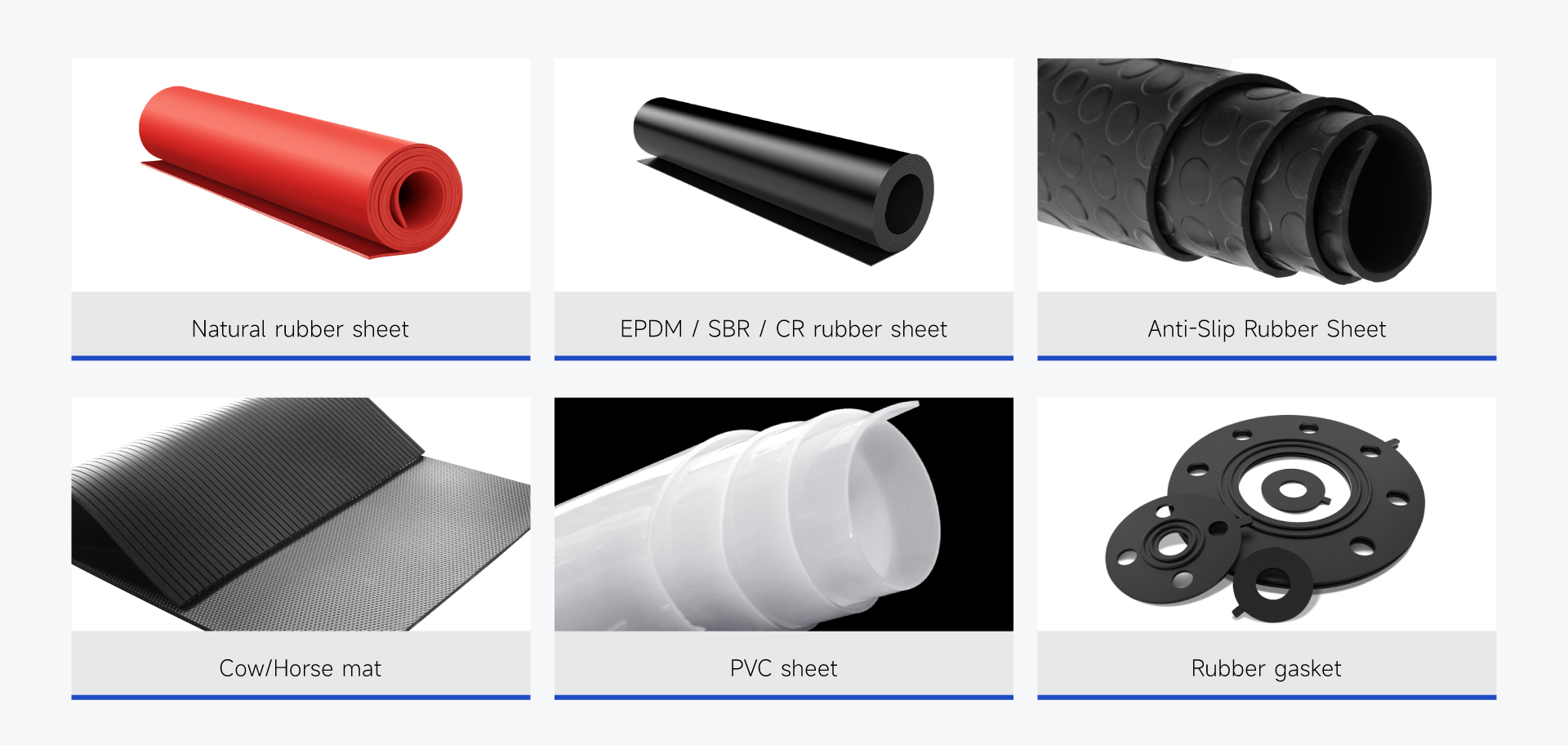
One of the most important factors is the environment in which the rubber sheet will be used:
Temperature: High-heat environments require silicone or FKM sheets, while general applications may only need natural rubber.
Outdoor exposure: If exposed to sunlight, ozone, or rain, EPDM or neoprene rubber is ideal due to their weather resistance.
Chemical environment: If the sheet will contact oils, acids, fuels, or solvents, materials like nitrile or FKM should be prioritized.
Think about the actual purpose of the rubber sheet:
Sealing and gasketing: Requires high elasticity and resilience to ensure a tight seal.
Shock absorption and vibration isolation: Materials with good flexibility like natural rubber or neoprene work best.
Electrical insulation: Silicone and EPDM are often used due to their non-conductive properties.
Food and medical use: FDA-approved silicone sheets are the safest choice.
Rubber sheets must be compatible with the substances they encounter. For example, nitrile is excellent for oils but not suitable for strong oxidizing agents. EPDM resists water and UV but may not handle hydrocarbons well. Always match the material to the substances in your environment.
While high-performance rubber like FKM or silicone is expensive, they provide long-term value in extreme conditions. For general-purpose or cost-sensitive projects, natural rubber or nitrile offers a balance between affordability and performance.
Overview: Produced from natural latex, NR is one of the oldest and most widely used rubber types.
Advantages: Exceptional elasticity, high tensile strength, and good abrasion resistance. It also performs well in dynamic applications where flexibility is key.
Limitations: Poor resistance to oils, fuels, and ozone. Not suitable for outdoor use.
Applications: Gaskets, conveyor belts, flooring, and shock-absorbing pads in industries like construction, agriculture, and mining.
Overview: A versatile synthetic rubber offering a good balance of properties.
Advantages: Strong resistance to weather, ozone, sunlight, and moderate chemicals. It also has good flame resistance and mechanical stability.
Limitations: Less resistant to petroleum-based oils compared to nitrile.
Applications: Outdoor sealing, marine environments, automotive parts, and general industrial gaskets.
Overview: Specially designed for environments with heavy oil and fuel exposure.
Advantages: Excellent oil, fuel, and grease resistance; good tensile strength; and cost-effective for industrial use.
Limitations: Limited weather and ozone resistance, not ideal for outdoor long-term use.
Applications: Oil seals, O-rings, gaskets, hoses, and applications in petroleum, automotive, and mechanical industries.
Overview: Known for its outstanding resistance to weathering and aging.
Advantages: Excellent resistance to ozone, UV radiation, water, and steam; suitable for outdoor and high-humidity environments.
Limitations: Poor resistance to oils, fuels, and hydrocarbons.
Applications: Outdoor sealing, water systems, and automotive weather stripping.
Overview: A premium synthetic rubber widely used in extreme conditions.
Advantages: Exceptional temperature resistance (from -60°C to +250°C), food-grade versions available, non-toxic, and excellent electrical insulation.
Limitations: Higher cost, lower abrasion resistance compared to natural rubber.
Applications: Food processing, pharmaceutical, aerospace, and high-temperature industrial gaskets.
Overview: A high-performance fluorocarbon rubber designed for demanding environments.
Advantages: Outstanding chemical resistance, excellent oil and fuel resistance, and stability in high-temperature conditions (up to 200°C).
Limitations: Higher price compared to most other rubber types.
Applications: Aerospace, automotive fuel systems, chemical plants, and industries requiring resistance to aggressive fluids.
Overview: A synthetic rubber with superior impermeability to gases.
Advantages: Excellent resistance to weathering, ozone, and chemicals; high gas impermeability makes it ideal for sealing air and gases.
Limitations: Lower resistance to oils and hydrocarbons.
Applications: Pharmaceutical stoppers, chemical lining, automotive parts, and applications requiring airtight sealing.
Define Your Environment Clearly – Record the exact temperature range, exposure conditions, and substances involved in your application.
Seek Professional Advice – Manufacturers with years of experience can recommend materials that fit your needs and help avoid costly mistakes.
Perform Sample Testing – Always request samples and test them under real conditions before confirming bulk orders.
Q: What industries benefit the most from natural rubber sheets?
A: Natural rubber is widely used in industries requiring elasticity and abrasion resistance, such as mining, agriculture, flooring, and conveyor systems.
Q: Which material is best for high-temperature applications?
A: Silicone rubber (up to +250°C) and FKM (up to +200°C with chemical resistance) are the most suitable materials.
Q: Which rubber sheets are ideal for outdoor use?
A: EPDM and neoprene are the top choices due to their superior resistance to ozone, UV, and weathering.
Q: What is the most cost-effective rubber sheet material?
A: Nitrile (NBR) and neoprene (CR) offer an excellent balance of performance and affordability for general industrial applications.
The right choice of industrial rubber sheet depends on your working conditions, required performance, and budget. Natural rubber is great for general use, nitrile is best for oil resistance, EPDM and neoprene excel outdoors, silicone works in extreme temperatures, and FKM provides unmatched chemical resistance.
By understanding your application, consulting experts, and testing samples, you can select the most efficient and cost-effective rubber sheet for your business needs.
Tianjin Qihang Plastic Technology Co., Ltd
12+ Years Expertise in Industrial Rubber Sheet Manufacturing • Global Export Leader • REACH/RoHS Certified
...[ Read More >>]


